MEET THE FILMMAKER
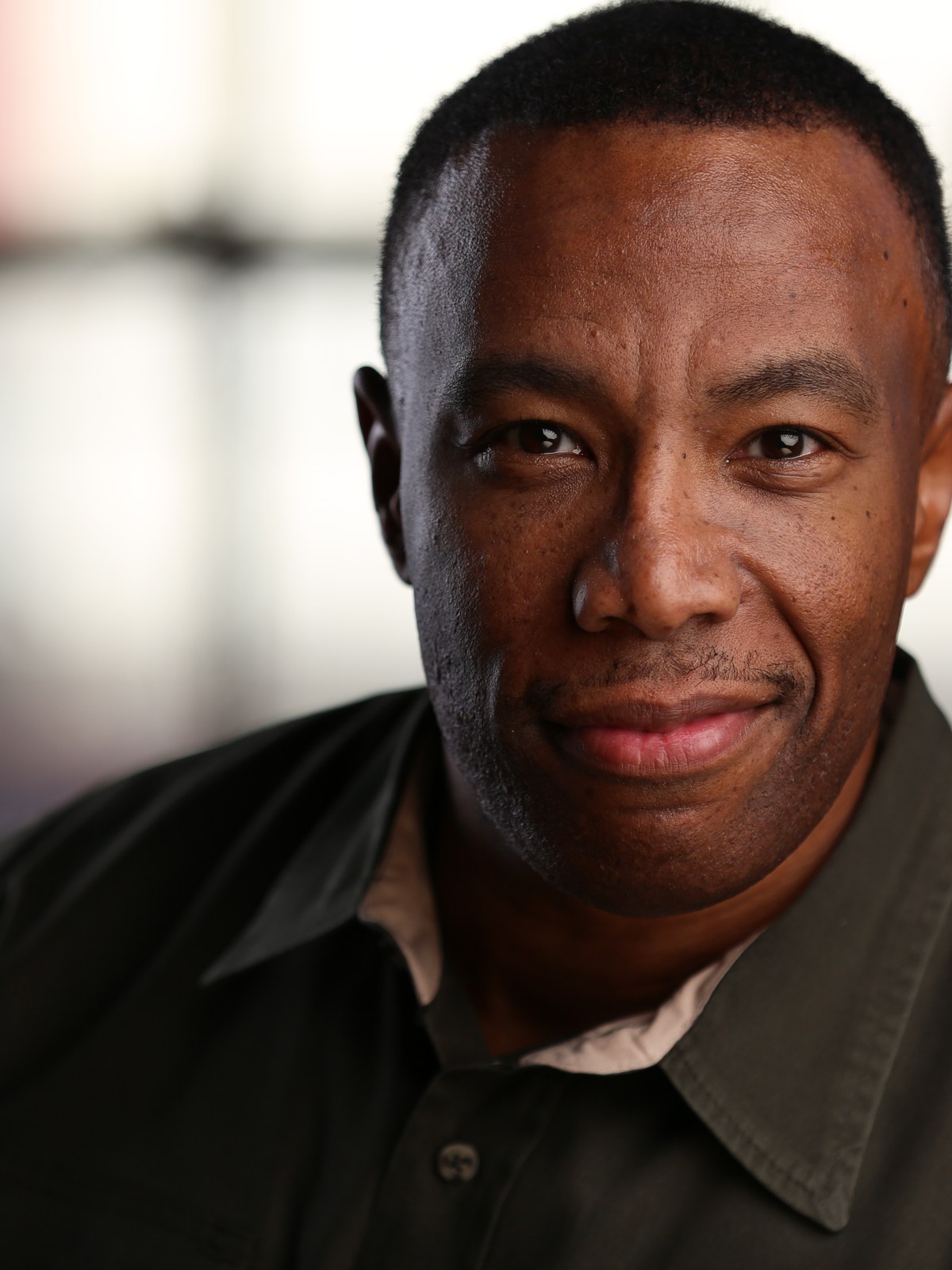
B.J. Winfrey
Screenwriter. Director. Playwright. Actor. Producer. Published author. A storyteller whose work has always lived where psychology meets performance — and whose creative life has been building, quietly and deliberately, toward BLUE.
2x
NAFCA Award Winner
1st
American to win NAFCA Best Short Film/Trailer
2
Published Novels
Executive Biography
B.J. Winfrey is an Atlanta native, and the city lives in everything he makes. He came up inside its contradictions — the sacred and the street, the choir and the corner — and learned early that the most honest stories are the ones a community would rather keep quiet.
He studied both halves of his instinct at Emory University, earning a B.A. in Psychology and a B.F.A. in Theater & Film Studies. One taught him why people bury what they feel; the other gave him the language to bring it back into the light. That double vision — the psychologist's eye and the dramatist's instinct — remains the signature of his work.
In 1991, he founded and served as Artistic Director of the AHANA Theater Group, and co-founded the AHANA Artists Collective — building a stage for voices the mainstream overlooked. From there he became an award-winning playwright, then an actor, then a screenwriter — never abandoning a craft, only adding to it. Each discipline deepened the next.
He is also a published author. In 2016 he released his debut novel, The Final Lesson, the first volume of the Everybody Wants to Rule the World saga, followed in 2025 by its second volume, Beware the Icestorm — both published through Icestorm Publishing. The same instinct for character and consequence that drives his films lives on the page.
Today he writes, directs, and produces under his own banner, as Founder of Winfrey Media Group and its film division, Icestorm Studios — the home of BLUE. The independence is the point: it lets him chase the story rather than the trend.
Across four decades of storytelling, one belief has never moved. It is the sentence he returns to before every project, and the standard he holds each one against.
“Great stories, well told.”
Creative DNA
The Story Behind the Storyteller
B.J. Winfrey's work is not the product of a single moment but of a lifetime of converging influences. To understand BLUE is to understand the six currents that shaped the man who made it.
Faith
When Winfrey was seven, his mother was ordained as a minister, and the church became the architecture of his childhood. One of the first books he remembers reading was an illustrated children's Bible — and in its pages he met sacrifice and betrayal, prophecy and redemption, miracles and moral consequence.
Long before he had a word for it, he understood that these were the oldest stories we tell, and that they endure because they refuse easy answers. Faith did not only shape what he believed; it shaped how he understood story itself.
Mythology
That early hunger for the eternal led him to the myths of Greece, Rome, and Egypt, and then outward — to The Iliad and The Odyssey, to Greek tragedy, to Shakespeare, and to August Wilson and Athol Fugard.
From each he took the same lesson: a single story can hold a whole moral universe. Justice, sacrifice, destiny, identity — the questions never change, only the voices asking them.
Music
Music was the constant. An only child, Winfrey grew up inside his mother's extensive vinyl collection — companion, teacher, and first window onto how a feeling becomes a form. Artists like Prince showed him that a single creator could write, perform, produce, and build entire artistic worlds.
He began writing songs in high school, sang lead in a band in college, and opened the plays he directed with carefully chosen song montages that set an emotional weather before a word was spoken. In BLUE, that instinct becomes structure: the songs are not score — they are evidence.
Performance
Theater was where everything met. Writing, directing, acting, and music converged on a single stage — and in 1991 he built one of his own, founding AHANA Theater Group and serving as its Artistic Director.
He acted. He directed. He wrote. And in doing all three he learned the lesson that still governs his films: character will always matter more than spectacle. The most expensive effect in the world means nothing if the audience does not believe the person in front of it.
Psychology
His degree in Psychology was not a detour from the arts but a deepening of them. It gave language to a fascination he already had — why people make the choices they do, and what those choices cost them.
His stories return, again and again, to the interior: grief and guilt, forgiveness and trauma, the slow work of identity and the weight of moral conflict. He approaches characters with psychological curiosity and a dramatist's instincts — without flinching from what they would rather hide.
Cinema
Film became the medium through which every earlier influence converged. Fantasy and science fiction, horror and suspense, westerns and emotionally driven drama — he absorbed them all, less for their plots than for what they taught him about storytelling: how to hold an audience, how to earn a feeling, how to make the impossible feel inevitable.
Films that centered Black characters carried a particular weight, offering him the rare experience of seeing Black lives placed at the center of the screen at a time when that was far from common. BLUE is the sum of all of it.
“BLUE is not a departure from any of this. It is the convergence.”
Creative Philosophy
What He Believes About Story
A handful of convictions sit beneath everything he makes. They are not slogans — they are the reasons the work looks and feels the way it does.
“Storytelling is an expression of love.”
He does not write to be admired. He writes because caring about a character — and asking an audience to care too — is, to him, the most honest form of affection. Every film is a way of saying: these people are worth your time, and your tears.
“Every story is a mystery.”
Not in genre, but in structure. Whether it is grief, faith, or a buried crime, he believes every story withholds something the audience aches to know — and that the art is in deciding what to reveal, and exactly when.
“Great stories come from inspiration. ‘Well told’ comes from perspiration.”
The idea is a gift; the execution is a discipline. His standard — ‘great stories, well told’ — is really two promises: to chase the spark honestly, and then to do the unglamorous work of earning every beat of it.
“Character before spectacle.”
Theater taught him this before film could. The most expensive effect on screen means nothing if the audience does not believe the person standing in front of it. He builds inward first — the wonder only matters once you care who it happens to.
“Music is storytelling.”
A song was never background to him. It is character, memory, and evidence — a second script running beneath the first. In BLUE, that conviction becomes the very engine of the mystery.
Artistic Lineage
The Filmmakers Who Shaped the Craft
These are not favorites, and BLUE is not an imitation of any of them. They are the artists whose work taught Winfrey something essential about his own — lessons in tension, atmosphere, and the courage to tell a story only he could tell.
Christopher Nolan
Original storytelling and fearless reinvention — proof that ambition and emotion can share the same frame, and that spectacle means most when it serves character.
David Fincher
Atmosphere as storytelling. The discipline of precision — camera movement, lens, light, color, and performance all bent toward a single, controlled effect.
Jordan Peele
Universal storytelling rooted, without apology, in Black culture — a reminder that the most specific stories travel the furthest, and that genre can carry truth.
M. Night Shyamalan
Suspense built on feeling rather than trickery, and the elegance of a twist that reframes everything before it without betraying the audience's trust.
Alfred Hitchcock
The architecture of suspense itself — point of view, the patient escalation of tension, and the quiet art of guiding what an audience fears, and exactly when.
CAREER TIMELINE
One Story, Told in Stages
From a high-school stage in Atlanta to the director's chair on BLUE — a path that never discarded a craft, only gathered them.
1986
Award-Winning Actor
Earns Best Supporting Actor recognition with the Westminster Players — the first sign of a life built around performance and story.
1991
Founded AHANA Theater Group
Founder and Artistic Director of AHANA Theater Group, and Co-Founder of the AHANA Artists Collective at Emory University — among the campus's first multicultural performance ensembles.
1991–1992
Award-Winning Playwright
Back-to-back Alpha Psi Omega honors for Best Student Written Play — The Fantasy of Justice and Through It All.
1992
Alpha Psi Omega Induction
Inducted into the Alpha Psi Omega National Theatre Honor Society.
1993
Emory Graduate
Completes a B.A. in Psychology and a B.F.A. in Theater & Film Studies — the twin lenses that shape every character he writes.
1994
First Film on 16mm
Directs his first short film, Kahlua and Cream, shot on 16mm — the moment the stage storyteller first picks up a camera.
2000s
Screenwriter
Moves from stage to screen, carrying a playwright's ear for dialogue and a psychologist's eye for what people hide.
2013–2014
Award-Winning Filmmaker
Becomes the first American filmmaker to win NAFCA Best Short Film/Trailer, with additional honors as a screenwriter.
2016
Published Author
Releases his debut novel, The Final Lesson (Everybody Wants to Rule the World, Vol. 1), through Icestorm Publishing.
2025
Novelist
Publishes Beware the Icestorm (Everybody Wants to Rule the World, Vol. 2), the follow-up to The Final Lesson — expanding the saga and confirming a storyteller who works across page and screen.
Present
Founder, Winfrey Media Group
Builds Winfrey Media Group and its film division, Icestorm Studios, to produce work on his own terms.
2026
Screenwriter / Director of BLUE
Brings a creative lifetime to bear on his most ambitious work yet.
The Creative Journey
AWARDS & RECOGNITION
A Progression of Recognition
Not a trophy case — a through-line. Each honor marks a step from the stage to the screen, and from local rooms to the international stage.
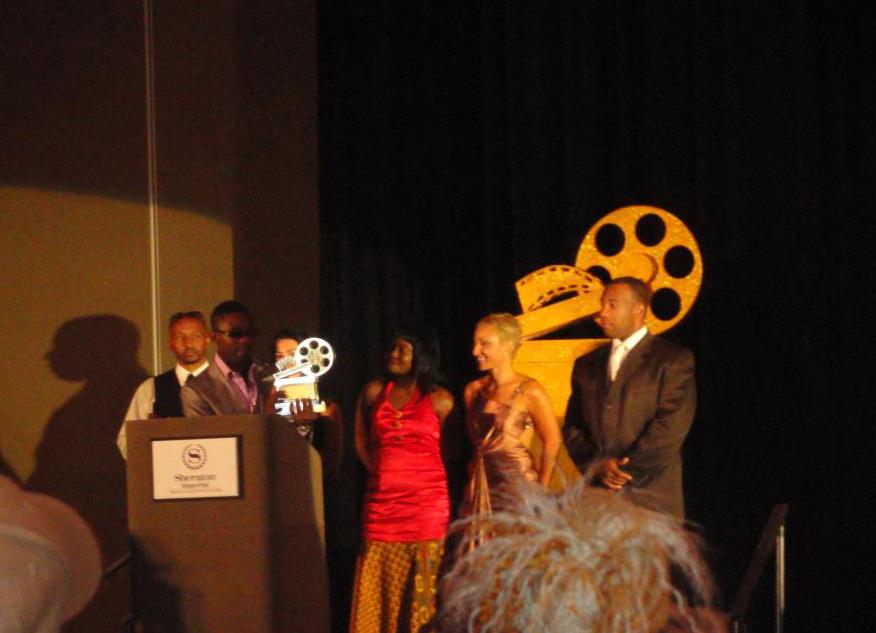
Accepting at the NAFCA Awards
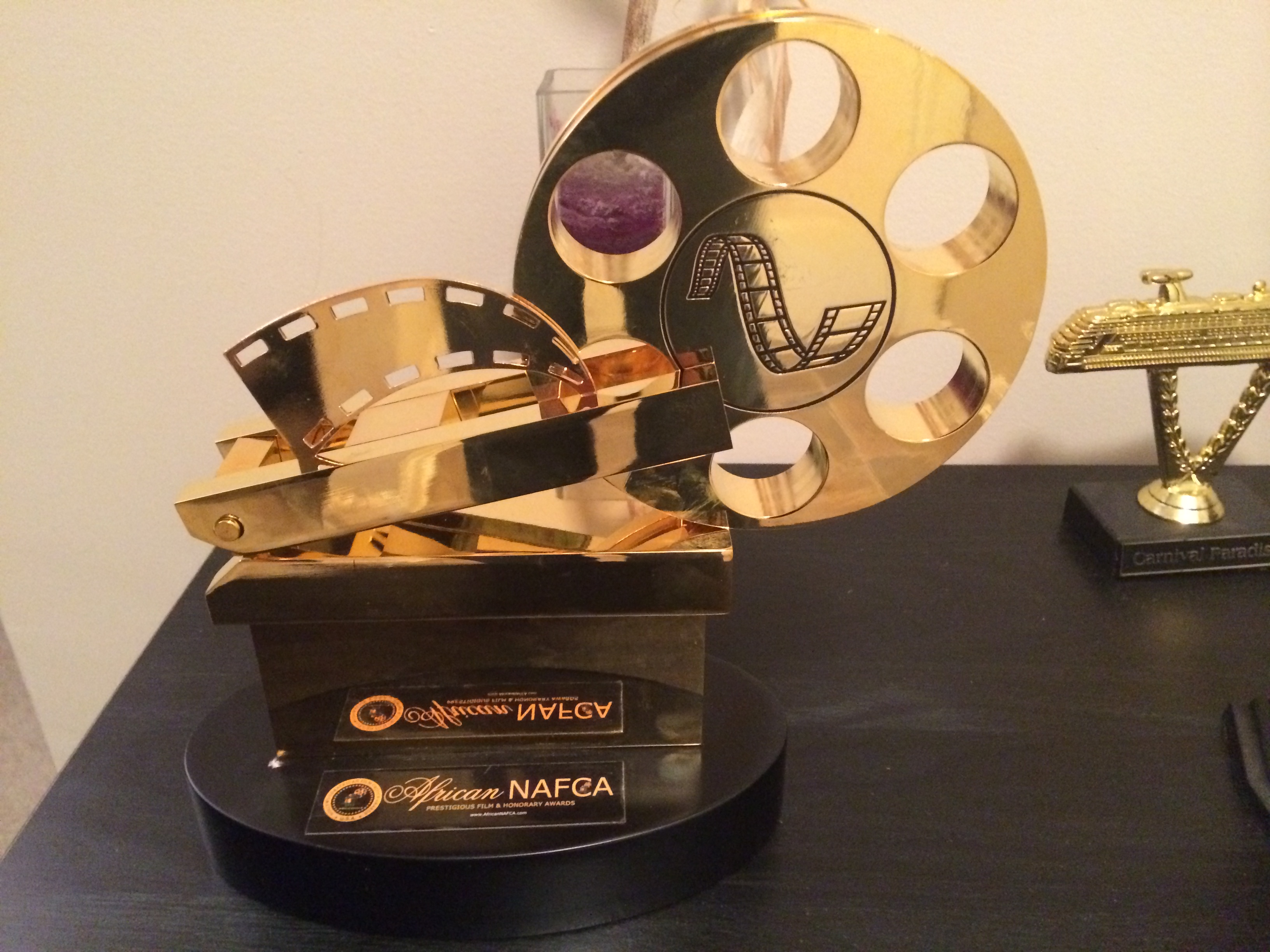
The Recognition
2013 – 2014On the international stage, Winfrey's screen work earned recognition from the Nigerian and African Film Critics Association — culminating in a distinction no American filmmaker had held before.
NAFCA Best Short Film/Trailer
WinnerFive
First American filmmaker to win NAFCA Best Short Film/Trailer
NAFCA Best Film in the Diaspora
WinnerOne Night in Vegas — Screenwriter
NAFCA Best Screenplay
NomineeOne Night in Vegas
NAFCA Best Screenplay in the Diaspora
NomineeOne Night in Vegas
NAFCA Best Short Film/Trailer
NomineeGone
The Foundation
1986 – 1992Long before the film awards, the stage made him. The earliest honors trace a young artist learning the craft from every seat in the house — actor, playwright, and inductee.
Alpha Psi Omega Best Student Written Play
WinnerThrough It All
Alpha Psi Omega National Theatre Honor Society
MemberInducted
Alpha Psi Omega Best Student Written Play
WinnerThe Fantasy of Justice
Westminster Players Best Supporting Actor
WinnerThe Pigman
SELECTED FILMOGRAPHY
A Body of Work
A curated selection of directorial and screenwriting work leading to BLUE.
FIVE
Short Film
Written & Directed by B.J. Winfrey
- WINNER — NAFCA Best Short Film/Trailer — 2014
- OFFICIAL SELECTION — BronzeLens Film Festival — 2014
- OFFICIAL SELECTION — Rhode Island International Film Festival — 2014
- OFFICIAL SELECTION — AFRIFF — 2014
GONE
Short Film
Written & Directed by B.J. Winfrey
- NOMINEE — NAFCA Best Short Film/Trailer — 2013
CHERRY
Short Film
Written & Directed by B.J. Winfrey
- OFFICIAL SELECTION — Dixie Film Festival — 2005
ONE NIGHT IN VEGAS
Feature Film · Official Trailer
Screenplay by B.J. Winfrey
- WINNER — NAFCA Best Film in the Diaspora — 2013
- NOMINEE — NAFCA Best Screenplay — 2013
- NOMINEE — NAFCA Best Screenplay in the Diaspora — 2013
Additional Directing Work
Written & directed by B.J. Winfrey
As an Author
Published Works
The same instinct for character and consequence that drives his films lives on the page. Winfrey is the author of the ongoing fantasy saga Everybody Wants to Rule the World, with two volumes published to date through Icestorm Publishing.
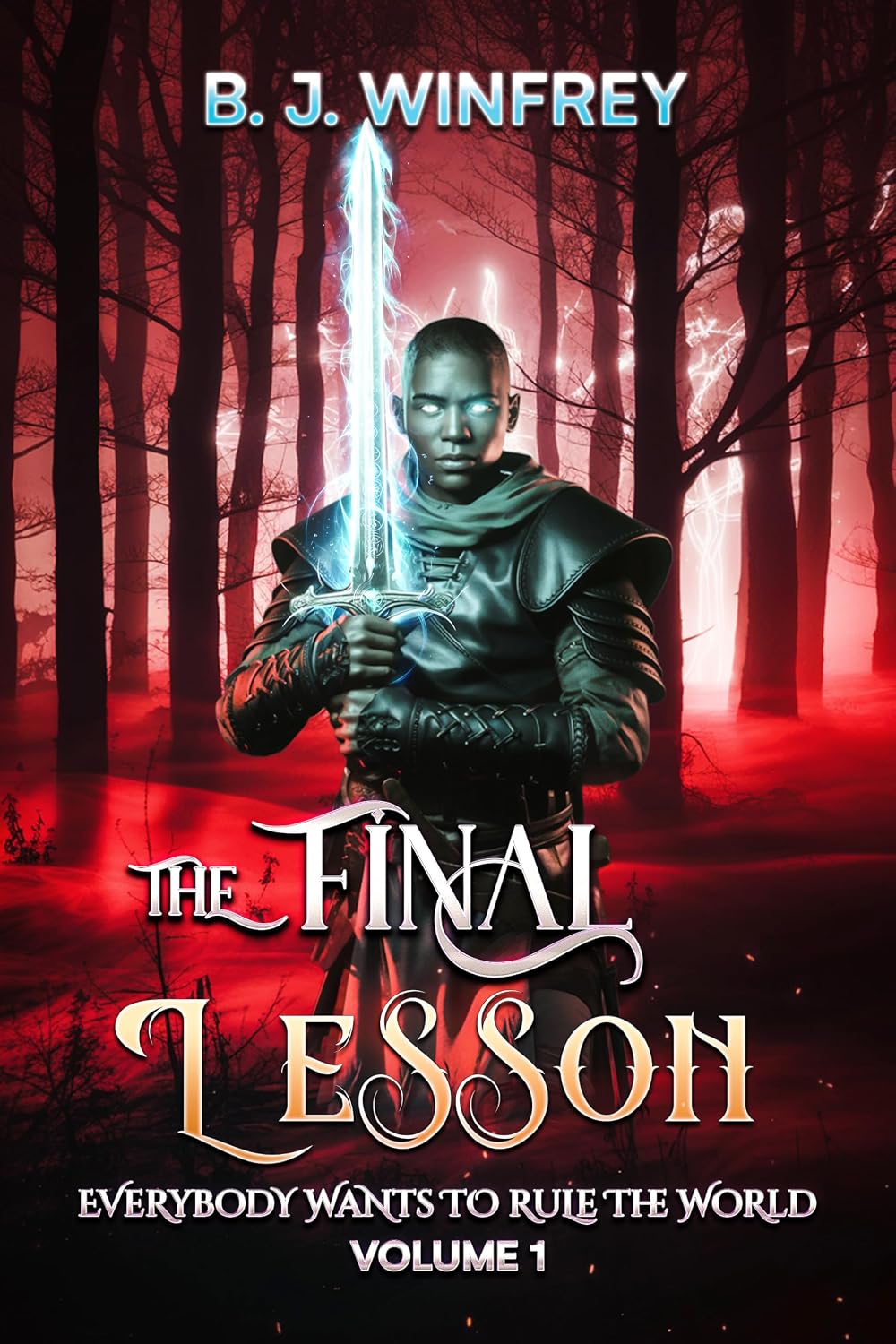
Everybody Wants to Rule the World — Vol. 1
The Final Lesson
Novel — 2016 · Icestorm Publishing
Winfrey’s debut novel follows Durland Prothero, an orphan from the planet Zuun who survives the destruction of his village only to be taken in for a series of brutal, transformative lessons. A young-adult fantasy about love, loss, and destiny — later adapted into his short film of the same name.
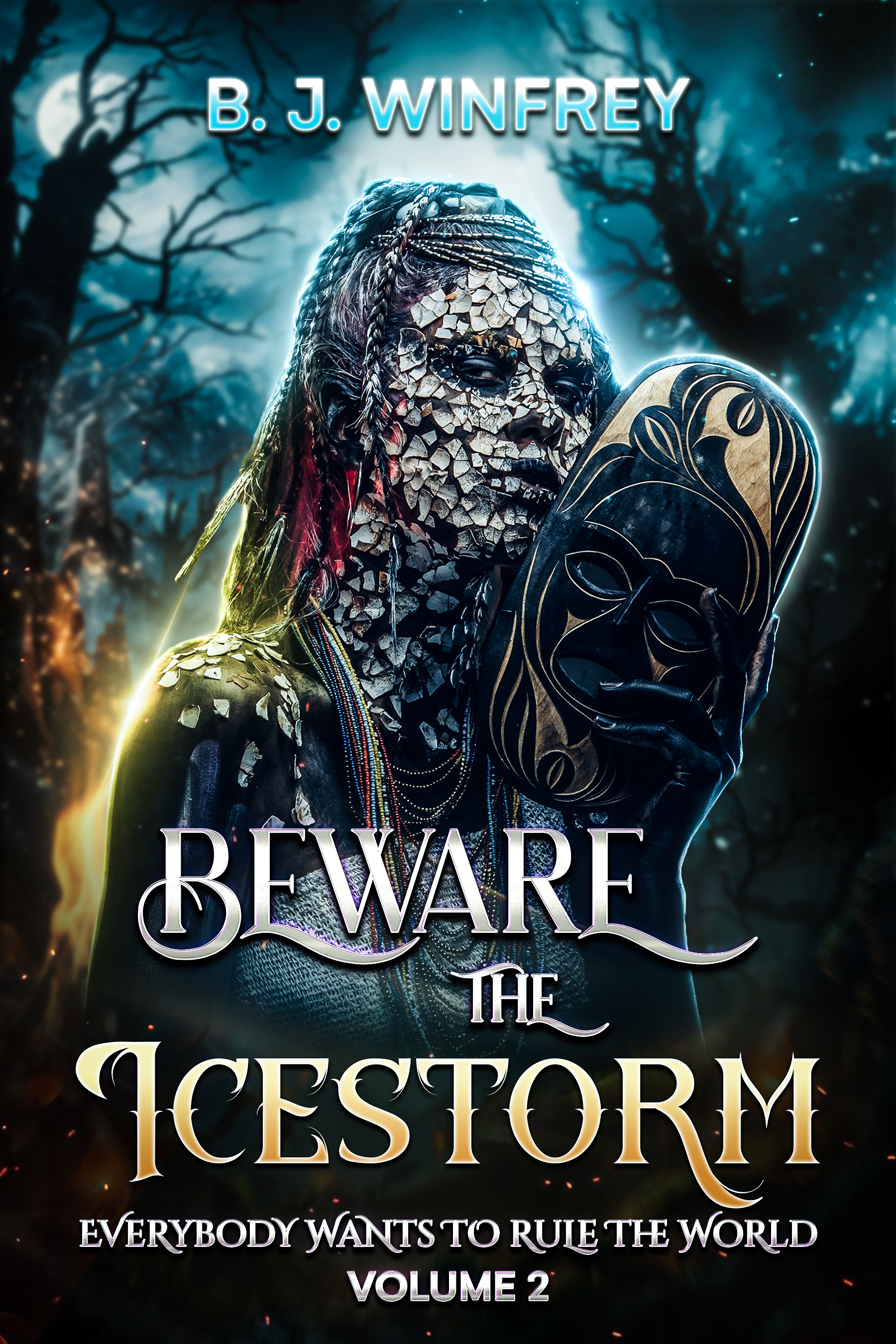
Everybody Wants to Rule the World — Vol. 2
Beware the Icestorm
Novel — 2025 · Icestorm Publishing
The second volume deepens the saga, widening its world and raising the stakes as old loyalties fracture and new powers rise. It confirms Winfrey as a storyteller who builds across forms — page, stage, and screen — with a single, consistent voice.
Why BLUE
Why This Story, Now
BLUE began where so much Atlanta music begins — in a basement. A producer alone with a beat, chasing something just out of reach. That image had lived with Winfrey for years, because it was never only about a song. It was about the things we bury, and the way they keep finding their way back to the surface.
For decades he had wanted to direct a feature — not just any feature, but the right one: a story big enough to hold everything he had spent a life learning. He wrote plays, acted, wrote screenplays, published novels, and directed shorts, and all of it was, in some quiet way, preparation. He was waiting for the story that needed all of him at once.
BLUE is that story — the convergence of Atlanta and faith, of music and mythology, of psychology and suspense. It is a supernatural mystery in which the songs are evidence and grief becomes revelation. And it is the one he could not have made at twenty-five, because he had not yet lived the things it is about. He can make it now.
Professional Links